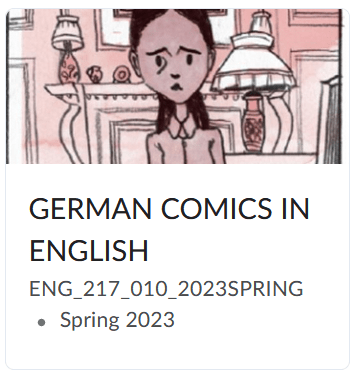
Voices in the Dark by Ulli Lust is a graphic novel that poses many ethical questions due to the nature of the subject matter. The graphic novel follows Hermann Karnau, a sound engineer hired to capture sounds for Nazi Germany, and Helga Goebbels, the oldest daughter of a Nnazi propagandist, as she begins to observe her world and her family more closely. The Holocaust and Nazi Germany is a very sensitive and serious part of World History, so the existence of fictional books, films, or graphic novels being created itself is controversial, including Ulli Lust’s Voices in the Dark.
One big issue with this is the fact that the focus on perpetrators of such tragedies is problematic for representing the legacy of survivors and victims of such atrocities.
Voices in the Dark spends a lot of time focusing on characters such as Joseph Goebbels and Adolf Hitler. It can be problematic to focus too much on perpetrators, as the intent could be questioned, but it is hard to avoid in a storyline like Voices in the Dark. Adolf Hitler is referenced in the graphic novel in almost a comedic way that humanizes him a bit more outside of usual depictions.
A servant in the bunker, on page 212, describes the leader as someone who “gorges himself on chocolates and chocolate-flavored pastries all day long” (Lust). On page 213, he is drawn in the bunker looking weaker with chocolate dripping down his face. On another page, 294, Hitler is drawn simply in a chair, looking very happy to be with the children as one of the younger girls sat on his lap.
Joseph Goebbels is also largely displayed throughout the graphic novel, as he is Helga’s father and such a prominent part of Nazi Germany. Joseph almost seems like the way other dad’s are represented in media. Joseph Goebbels is portrayed on page 77 with a big smile on his face, slicked back hair, and a cool car ready to show his girls. He teases with his kids that their mother “will get some more worry lines” if they are out too long in the car, but he is still enthusiastic about the idea but seems like how other medias portray dads as the more fun, laid-back ones and the moms as more responsible as parents (Lust).
Later on, he seems to be caring for the children too such as on page 111 when he said, “but Hilde, my child, you mustn’t be afraid when I’m with you” (Lust). On page 113, Joseph Goebbels is on the veranda sitting close to his children, saying “once upon a time” as he begins reading to them (Lust).
The portrayal of him here seems protective as a dad would be, and humanizes him, even though he was a horrible Nazi propogandist and ordered for his own children to be killed when the war was going south by tricking them into thinking they were relocating with the help of their mother.
Portraying both characters in such matter has ethical questions, such as the ones brought up in the paper “The Ethics of Representation.” It is stated that “the most difficult aspect of trauma representation is the question of how to represent the ‘“inducer of trauma’” (Martens-Olzman 23). On the next page, it is said that “torture… being beyond the ‘scope of morality,’ and thus categorically non-human” is how ethical treatments of such abusers should be viewed according to Coatzee (Martens-Olzman 24).
On the other side, it is important to call out how torturers, such as the Nazi leaders in the graphic novel, are human. Humans are behind these actions, and it is important to portray that on this side of the moral debate because it is how society must work to prevent atrocities like the Holocaust and the entire Nazi regime from recurring again.
It is said that “Nazism, rape, torture–all were created and perpetrated by humans in the most literal sense, and because of this they cannot be forgotten” and this fact helps show how barbaric the Nazi regime is in Voices in the Dark towards even their own (Martens-Olzman 27).
Another debate that graphic novels depicting the Nazi regime face is if it is even ethical to make art or literature surrounding the Holocaust or Nazi Germany that is fictional in all or some capacities, and that education should focus on real historical based sources.
Voices in the Dark is a combination of both art and literature depicting the regime in a fictional manner based onoff the tragic end of the real Goebbels children.
The pages towards the end of the graphic novel are rather grim, such as on pages 328 and 329. The graphic novel depicts the children being put to bed with the promise of flying away on a plane when they were to be killed that night. Helga starts crying, and her mother seems to be on the verge of crying as she tells her children “you want to get plenty of sleep in, don’t you, before we catch the plane” (Lust).
The autopsy scenes on pages 354-357 are also brutal, as it shows how cold and scientific it is. There are scenes of Helga on the table, showing her natural hair not in braids, being photographed at different angles for the autopsy as it also shows Hermann Karnau breaking down while reading the report many years later. The autopsy report is graphic and full of description, illustrating how far they went during it. There is no saying exactly how everything played out between Helga, her mother, and the other children that night, and this can bring up ethical questions.
It has been argued, in reference to the Holocaust that “the horrors of Auschwitz and Buchenwald need no artistic amplification” (Kaiser). This could arguably be portrayed with the children’s tragic end in Voices in the Dark. It could feel exploitative to create fiction based onoff the children of Joseph Goebbels who were killed because of the regime’s failures.
Philosophers, such as Theodore Adorno, stated that “to write poetry after Auschwitz is barbaric” (Kaiser). However, it has also been argued that literature is essential for understanding history.
Literature helps connect empathy to the historical facts and images available, as “Literature is supplementary, not antithetical, to history: it allows, and in the best instances demands readers to universalize, empathize, to visualize and imagine, not merely to be informed” (Kaiser).
Voices in the Dark in this case gives a voice and a story to the Goebbels children, as well as the overall horrors of the regime through the artwork and the story.
Weighing both sides, it is hard to necessarily decide between the two options because the issue feels like it could be in a morally gray area. However, Voices in the Dark seems to be ethical for several reasons. It reminds readers how human the victims and the perpetrators are, and helps show readers that “victims aren’t statistics” (Kaiser).
The children were killed, so it is hard to say how exactly they’d like to be portrayed, but that is why it is important to try to tell their stories. It helps highlight how barbaric the regime really was, as “literature is the pathos to history’s logos” (Kaiser).
Fiction can be a powerful tool in Holocaust and Nazi Regime education, especially graphic novels. The graphic novel, Maus, was banned in Texas which is unfortunate for those trying to keep awareness of the Holocaust in young children, and Voices in the Dark could come under the same fire.
Maus empowered the story of Holocaust survivor, Vladeck Spiegelman, as it challenged “Nazi propaganda that likened Jews to rats” that affected Spiegelman and helped create a feeling of “what is known in Germany as Vergangenheitsbewältigung, overcoming the past or coming to terms with the history of Nazism” (Nijdam).
Voices in the Dark does the same for giving Helga Goebbels a voice through a fictional lens as she doesn’t have one from dying as a result of her father being such a large part of the regime. People reading these fictional stories make the education on Nazi horrors more accessible, as graphic novels are friendly for people to read. Literature in comic style is important for combating lack of interest in normal, historical accounts on the Holocaust, as “comics are foundational in Holocaust education” and banning graphic novels like Maus and Voices in the Dark is a great disservice to students” (Nijdam).
Sources
Biz Nijdam. “Banning ‘Maus’ Only Exposes the Significance of This Searing Graphic Novel about the Holocaust.” The Conversation, The Conservation, 15 May 2022, https://theconversation.com/banning-maus-only-exposes-the-significance-of-this-searing-graphic-novel-about-the-holocaust-175999.
Kaiser, Menachem. “The Holocaust’s Uneasy Relationship with Literature.” The Atlantic, Atlantic Media Company, 28 Dec. 2010, https://www.theatlantic.com/entertainment/archive/2010/12/the-holocausts-uneasy-relationship-with-literature/67998/.
Lust, Ulli, and Marcel Beyer. Voices in the Dark. Translated by John Brownjohn, New York Review Books, 1997.
Martens-Olzman, D. (2018, May). The Ethics of Representation: Rape, Genocide, Torture. Santa Barbara; The University of California, Santa Barbara.

 Adventures of Jessi Walker